
Making a difference and having fun don’t have to be mutually exclusive.

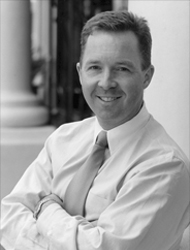
Today I’d like to highlight someone who’s definitely living a thrilling life—making a huge difference in the world and serving a great example of how to choose the path less taken. Dwight Turner is a close friend whose passion is to help the less fortunate in any way he can, and he runs an organization here in Thailand called In Search Of Sanuk, where he promotes worthwhile humanitarian causes.

Sanuk is a Thai word roughly translated as fun or enjoyment. Sanuk, however, is much more. This value permeates Thai society giving people a jovial, lighthearted outlook on life. We combine this aspect of Thai culture with our goals to help needy people. To us, sanuk is a lifestyle. This lighthearted outlook naturally translates to those we’re trying to reach and becomes a powerful mechanism of hope and healing for all involved.

Dwight worked as an English teacher in Thailand for about two years off-and-on, and he was my only contact in Thailand when I first came out to Asia in 2008. We currently both live in central Bangkok, and Dwight spends the majority of his time promoting good causes and organizing mixers and fundraising events to raise money for charity projects around Bangkok and throughout the region. I do my best to help him promote his events, but he’s the mastermind—the real passion and drive to create change around here. He has worked with Burmese migrants, Balinese orphans, refugees, and much more. He’s the real deal.

Doing Good and Having a Blast at the Same Time

Together, Dwight and I host monthly Bangkok Tweetups—tech-centric Twitter meetups for charity. People get together to have some dinner and a few beers, meet interesting new folks (expats and locals) from around Bangkok, and a portion of what they spend on food & drinks goes to support In Search Of Sanuk projects in Thailand.
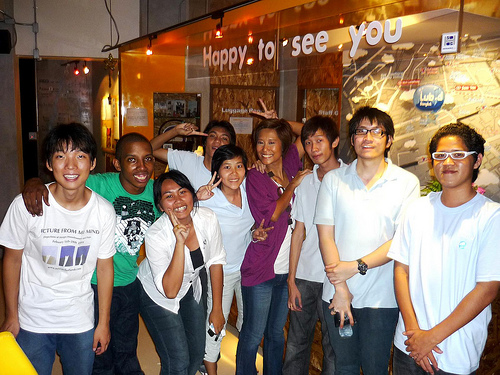
Ryan, Dwight & the Lub D staff

To recognize World Refugee Day on June 20th, Dwight hosted a Taste of Sri Lanka dinner at the Lub D hostel, attracting people from our Tweetups, from Facebook, and Couchsurfing. Everyone mixed and mingled, had some delicious food cooked by Tuan, the cook at the local refugee center, and proceeds went to support the medical needs of asylum seeking refugees.

And just recently, along with the good folks at Green Networking Days Bangkok, Dwight co-hosted a huge nightclub event at Fraser Suites called LUSH, Bangkok’s Green Night Out. There were over 250 people in attendance at this spectacular upscale rooftop bar, everyone danced and drank and enjoyed the DJ music, and we were able to raise 35,000 Baht (over $1000 US) for In Search Of Sanuk’s Urban Garden Project to put vegetable gardens in the Bangkok Refugee Center and slums.

 

Cody, Pom & Mint at LUSH

ISOS’ events allow people (especially young people and travelers) to do things they’d already want to do—get together with friends, go out dancing, grab dinner and drinks, or attend music & art events—and easily contribute to making a positive difference at the same time. I think this is a world-changing idea, and I know Dwight will leave a big impact on the world.

I’m sure there are people doing this elsewhere, but I’ve never witnessed someone so dedicated to empowering others to make a change. I’m excited that my lifestyle gives me the time to invest in travel, hanging out with friends like Dwight, and participating in good causes.

Announcement: My Charity Commitment

For a long time, I wanted to contribute to something like 1% for the Planet, Kiva.org, or local charities. When I visited Cambodia, I really felt compelled to contribute to causes in this region. One day I realized, ‘Hey I know Dwight personally, I trust him, and he’s committed his life to doing good for others!’ So I decided to work more closely with him. We’re making plans to travel to neighboring countries across Southeast Asia every three months and volunteer for good causes wherever we go. And starting this week, 5% of my business profits will go toward ISOS projects. Anyone who signs up for my consulting and services will help us make a difference.

Improving a Broken System

Sadly, the state of philanthropy and volunteerism in Thailand is pretty convoluted and decentralized. Dwight works painstakingly to get non-profit organizations and NGOs throughout Thailand collaborating with each other and to turn volunteer opportunities into something more organized than they already are, so that people can more easily contribute and make a difference.

When I’m in the US, watching mainstream media, it feels like there is a 24-hour-a-day bad news feed directly into your brain. There is the war in the Middle East, the ongoing argument over global warming, shrinking resources and a growing population. Watching the news makes people afraid and helpless. In the face of this negative hype, I think most folks tend to retreat from the “real world.” We look for ways to escape (me included): You go see the new Terminator movie. You go get a drink downtown with your friends. You play online games for hours on end. You do your job, you go home… But we ignore the genocide, hunger and poverty going on around the world. We even stay selectively ignorant about the issues in our own backyard. Like Dwight says in a recent post, maybe we are Over Entertained and Under Challenged:

Consider what avenues exist to discuss helping the less fortunate or marginalized in your community. What are they? Are you a part of the discussion? I fear so few of us are not even having these discussions. When they do occur, it happens in niches so isolated that they’re inaccessible to both other groups having similar discussions or people who are not members of these segmented communities.

It’s my passion to change this where I can.

LUSH mixer at Fraser Suites, Bangkok

In Search Of Sanuk makes it easy for anyone to get involved and support good causes by making it fun! If you want to volunteer, Dwight makes it easy, but if you want to make contributions without having to go out of your way or spend a lot of money, we also host mixer parties, art shows, donation drives, and other fun events in Bangkok to raise money (and awareness) for local charity projects. If you’re not in this part of the world, you can still show support by following the ISOS blog, connecting with Dwight on Twitter, signing up for our services, and helping us spread the word.

Dwight is a shining example that you can have fun and make a difference at the same time! He’s a selfless, hard-working guy who genuinely cares about making the world a better place. He understands that not everybody is able to or willing to make the same commitment, so he does his best to enable others to contribute in simple and fun ways. Bangkok wouldn’t be the same without him.

Photos by Sascha Steinhoff.

J.D. Roth at Get Rich Slowly has uncovered an interesting book that not many have come across. Read J.D.’s post about T. Harv Eker’s book Secrets of the Millionaire Mind: Mastering the Inner Game of Wealth. J.D. calls it more of a motivational tool than a personal finance guide (one thing I didn’t like about Robert Kiyosaki’s Rich Dad, Poor Dad–not enough concrete, actionable steps to take). I have not read it, but I found that at least Eker’s list of seventeen ways successful and wealthy people relate to money that unwealthy people don’t was very interesting. Remember, the way you think about things has a strong influence on how you behave and how successful you are at getting what you want in life. Here are Eker’s 17 things:

  1. Rich people believe: “I create my life.” Poor people believe: “Life happens to me.”
  2. Rich people play the money game to win. Poor people play the money game to not lose.
  3. Rich people are committed to being rich. Poor people want to be rich.
  4. Rich people think big. Poor people think small.
  5. Rich people focus on opportunities. Poor people focus on obstacles.
  6. Rich people admire other rich and successful people. Poor people resent rich and successful people.
  7. Rich people associate with positive, successful people. Poor people associate with negative or unsuccessful people.
  8. Rich people are willing to promote themselves and their value. Poor people think negatively about selling and promotion.
  9. Rich people are bigger than their problems. Poor people are smaller than their problems.
  10. Rich people are excellent receivers. Poor people are poor receivers.
  11. Rich people choose to get paid based on results. Poor people choose to get paid based on time.
  12. Rich people think “both.” Poor people think “either/or.”
  13. Rich people focus on their net worth. Poor people focus on their working income.
  14. Rich people manage their money well. Poor people mismanage their money well.
  15. Rich people have their money work hard for them. Poor people work hard for their money.
  16. Rich people act in spite of fear. Poor people let fear stop them.
  17. Rich people constantly learn and grow. Poor people think they already know.

Think carefully about these things. Some of these ways of looking at the situation are only subtly different, some are more noticeable disparities. But, just read over the list until you can see how looking at it one way might make you more inclined to succeed. It’s all in how you look at the challenges, and the mindset you approach them with. Thinking rich will instill in you the behaviors to become rich…

Secrets of the Millionaire Mind [Get Rich Slowly]

Rajesh Setty is president of Foresight Plus, where he helps give his professional clients the unfair business advantage. He also blogs at Life Beyond Code, where he coaches the rest of us on how to have the unfair life advantage! Rajesh has written numerous books (he had his first one published at age 13!) and founded several successful companies, and he shares his experience and knowledge with us in his Distinguish Yourself series, an invaluable resource on productivity, efficiency, and plain old good tips to raise your likability in the workplace and beyond! In an October 2006 interview with Little India magazine, he shared his top ten life tips:

1. Focus on ROII (Return on Investment for an Interaction)
Time is precious for everyone. Ensure that you provide the highest value for anyone investing time in an interaction with you.

2. Keep the promises you make to yourself
Making promises to yourself is easy. Keeping them is very hard!

3. Set right expectations
The first step in trying to exceed the expectations is to set them right in the first place.

4. Set higher standards
Raise your standards higher than the general norm and watch miracles unfold!

5. Avoid complacency at all costs!
There is nothing like maintaining the status quo. You are either falling or rising.

6. Commodotize your work at regular intervals
You don’t have to wait for someone else to commoditize your work.

7. Balance home runs with small wins
Home runs are great. But small wins are important too!

8. Think!
Set aside time to “Think.” Most often thinking is done in parallel to other activities.

9. Never take people for granted
Would it be any fun if someone took you for granted?

10. Ask the right questions
Answers help. But, it’s not always the answers that matter.

————

Rajesh is one of a few individuals whose success and generosity with his gifts is inspiring me to aim high, continue learning, and hopefully become an entrepreneur one day. So, thank you for your continued generosity and your painstaking work to share meaningful information and lessons with us all here in the online community, Raj!

[via: Top Ten Life Tips From a Tech Wiz]

Steve Jurvetson, managing director for the venture capital firm Draper Fisher Jurvetson, says that there is a common human desire that ties philanthropy, raising families, creating art and literature, and entrepreneurship together. Stephen Covey talks about it. It is the desire to create a legacy — something that will last beyond our short time here on earth.

Successful entrepreneurs are rarely lone rangers, but more often come in dynamic duos, so Jurvetson recommends that students who are hopeful entrepreneurs pay close attention to their classmates — keeping an eye out for uniqueness, persistence, and infectious enthusiasm among their peers. After all, his own classmate Jim Yang went on to start up Yahoo! Most importantly though, he says to look for ways you can harness what you’ve learned from past experiences in new and perhaps unfamiliar territory. How can you apply the things you learned from Chem 105 to starting a new side business, for instance?

That is you shouldn’t let job descriptions discourage you when you’re looking for something new — if you’ve accumulated experience across many different job types it will lend itself to being a flexible team-worker in different settings even if you haven’t worked in that field before. And for students, experience leading teams successfully in your academic career will translate well into being a fair and effective leader in business. You take the lessons you learn, and just apply them in a new setting.

Anyone who was present for Steve Jobs’ keynote speech at this year’s Macworld conference in San Francisco (or anyone who watched online), in which he introduced the iPhone as a groundbreaking new product, knows how captivating a speaker the Apple CEO is. And anyone who saw the long lines in anticipation of the iPhone’s release date knows how effective the PR hype has been.

Communications coach Carmine Gallo recently wrote up a great critique of Jobs’ presentation, packed with some useful tips for the rest of us to improve our public speaking skills:

  1. Build Tension. A good novelist doesn’t lay out the entire plot and conclusion on the first page of the book. He builds up to it. Jobs begins his presentation by reviewing the “revolutionary” products Apple has introduced. According to Jobs, “every once in a while a revolutionary product comes along that changes everything…Apple has been fortunate to introduce a few things into the world.” Jobs continues by describing the 1984 launch of the Macintosh as an event that “changed the entire computer industry.”
  2. Stick to One Theme Per Slide. A brilliant designer once told me that effective presentation slides only have one message per slide. One slide, one key point. When Jobs introduced the “three revolutionary products” in the description above, he didn’t show one slide with three devices. When he spoke about each feature (a widescreen iPod, a mobile phone, and an Internet communicator), a slide would appear with an image of each feature.
  3. Add Pizzazz to Your Delivery. Jobs modulates his vocal delivery to build up the excitement. When he opens his presentation by describing the revolutionary products Apple created in the past, his volume is low and he speaks slowly, almost in a reverential tone. His volume continues to build until his line, “Today Apple is going to reinvent the phone.” Be an electrifying speaker by varying the speed at which you speak and by raising and lowering your voice at the appropriate times.
  4. Practice. Jobs makes presentations look effortless because he takes nothing for granted. Jobs is known to rehearse demonstrations for hours prior to launch events. I can name many high-profile chief executives who decide to wing it. It shows. It always amazes me that many business leaders spend tens of thousands of dollars on designing presentations, but next to no time actually rehearsing. I usually get the call after the speaker bombs. Don’t lose your audience. Rehearse a presentation out loud until you’ve nailed it.
  5. Be Honest and Show Enthusiasm. If you believe that your particular product or service will change the world, then say so. Have fun with the content. During the iPhone launch, Jobs uses many adjectives to describe the new product, including “remarkable,” “revolutionary,” and “cool.” He jokes that the touch-screen features of the phone “work like magic…and boy have we patented it.”

[via: Steve Jobs’ Greatest Presentation]

I’ve been working on a interview series over at IWillTeachYouToBeRich.com about women and their relationship with personal finance and business, featuring several successful female entrepreneurs, consultants, and freelancers. The first one-on-one is with Pamela Slim, a great gal from Mesa, AZ. Pam left the corporate world in 1996 to start Ganas Consulting, and she writes a great blog called Escape from Cubicle Nation, about transitioning from the rat race to independence! These women each have some amazing firsthand experience and a lot of great advice; they’re an amazing source of wisdom, and it’s really eye-opening to hear their viewpoints. Here’s a short excerpt:

What challenges did you have to overcome in the process of setting up Ganas? Did you face any hardships you think most men in the consulting business might not face?

I actually had it pretty easy when I started my business since I got a nice, juicy client right off the bat (Hewlett Packard) and a six-month project that guaranteed I could pay my bills without worrying about hustling for new work. Since I was selling my brain and not a physical product, there were no big start-up costs or financing hurdles, which is sometimes where you hear stories of slightly increased challenges for women to get VC funding or bank loans.

My challenge in the early years had to do with pricing my services appropriately, since I tended to undervalue my services and felt uncomfortable asking for “too much.” I know that this is something that affects many new entrepreneurs, but in my 11+ years of self-employment experience, I would say that it affects women at a much higher ratio then men. It could be that there is a big conspiracy by the misogynistic male white corporate machine that starts to disempower us in kindergarten and stop us from all kinds of things like getting into math, finance and engineering careers. I discount nothing, as I was raised with a healthy dose of skepticism and a fondness for theories of oppression.

Another likely theory is that females are raised in many societies to be in a “helper” and “nurturer” role, and to downplay material gain. Fathers historically talk to sons more about business and finance than they do their daughters. Women are taught to compromise and broker peace, not to engage in hardball negotiations. Whatever the cause of my beliefs, I had to get over some ineffective mental blocks in order to charge what I was worth. I am always curious what other women (and men!) think about this topic, so please comment here.

You say you went through a phase of self-employment evangelism. What are some of the more effective methods you found to encourage others to go solo?

My best experience with encouragement is through my blog. I call it the Magical Mystery Tour, because ever since I began to write it, I have experienced a strange and wondrous connection with thousands of people I never would have had the chance to talk to. I never know which topic or post is going to make an impact…sometimes what I consider the most off-topic or “out there” subjects get the most heartfelt responses. Perhaps my favorite compliment ever came from a reader who told me that I represented “virtual hope.” How cool is that? I would like to stress that my goal is not to have everyone in the world quit their corporate job to start a business. Some are not ready, equipped or naturally suited to self-employment. What I do want to do is demystify the process so that more people feel comfortable exploring the option to see if it is right for them.

Continue reading at IWillTeachYouToBeRich.com: Heroines of Personal Finance and Entrepreneurship #1: Pamela Slim.

This week, I’m very happy to present an interview with David Anderson, partner and investment analyst with Palo Alto Investors, a $1.3 billion private equity hedge fund in Palo Alto, California, with a strong focus on fundamental research in undervalued technology, healthcare, energy, consumer products, and financial services companies. Anderson is an alumnus of the California State University at Sacramento, and earned his MBA at UC Berkeley’s Haas School of Business. He brings 17 years of experience in oil and gas exploration and in investment banking, and currently manages the Palo Alto firm’s roughly $400 million energy investment arm. I’ve been corresponding with David for a few weeks, and as the resident PA Investors energy and oil expert, he’s been kind enough to write back with some thoughtful insights on a few energy industry questions.

Before you joined Palo Alto Investors in 2001, you spent eight years with Chevron. What industry knowledge did you gain there that helps you with your current investment approach?

My Chevron days provided me with the basic understanding of oil and gas exploration, the economics of project development, and the underlying knowledge of how a company in an extractive industry works to grow and prosper through business cycles. Having worked in various sectors of the company, albeit mainly in North American exploration and production, I got a view of just how large the global energy infrastructure is. Most people really don’t realize just how much effort, time and capital it takes to bring on a major energy project, whether that is a new oil field, a new natural gas project, a pipeline, refinery expansion, or new shipping capacity. That knowledge allows me to understand that our global energy issues are not going to be solved in any short time period. I often like to point out to students the scale of the oil business by saying this: With global oil consumption of 85 million barrels PER DAY, that means that if you stacked up those barrels each day you would reach the moon about every four days. The size of the system to support that massive daily business is something that will not be replaced any time during my life. Knowing this makes me value those companies that help make it happen and gives me perspective on where the opportunities are. Finally, I’d say my experience allows me to recognize when I see a company that has significantly superior economics, a better business model, and differentiated operational leverage. Those are the things that can translate into superior investment performance over time.

What kind of assets does the fund hold? What kind of investing do you do in energy, and what alternative energy projects are you involved with?

Our firm manages about $1.3 billion in assets, with about 25% of that dedicated to energy investing currently. Most of what we do is traditional energy: oil and gas exploration and production, oilfield services, etc. We also look at energy technologies that enhance the core energy businesses–from 3-dimensional seismic technology for exploration to enhanced drilling technologies and what I call “chemical tech.” In pure alternatives, we divide our views into “transportation” alternative energy and “power” alternative energy. Those are two very different opportunities. On the transportation side, we have done a great deal of research into biofuels and on the power side we have researched and invested in solar, wind, as well as ancillary technologies that enhance distributed energy capabilities. In the transportation market, specifically the market for “alternative” diesel, we have also researched companies in both gas-to-liquids and coal-to-liquids markets.

Kohlberg Kravis Roberts and Texas Pacific Group just worked out the largest private equity leveraged buyout ever, for TXU Corp., which provides power to 2.2 million people in Texas. TXU agreed to scrap several planned coal plants and invest in renewable energy projects to get the blessing of Environmental Defense and the NRDC. Do you think it’s a signal that investors want to see the big energy companies move away from the status quo and focus on conservation and renewables?

My view on the deal is that power producers make for great private equity investments as they can be levered and have very visible cash flow streams. As for moving away from the status quo, I don’t see that. The plants to be scrapped aren’t really significant in the grand scheme of TXU and, in my opinion, represent a small sacrifice to allow regulators and environmental groups to “get something” out of the deal.

Since 2000, solar photovoltaics and wind power revenues have grown from about $6.5 billion to $30 billion annually. Do you think the renewables niche is driven mostly by environmental ideology and state policy, or do you believe there is a decent chance that a genuine market will evolve in the near future?

Wind is relatively competitive on a cost basis, but cannot be relied upon for baseline power. That means it is often a redundant investment and so can be hard to justify without significant incentives. Solar is definitely hard to justify for an average consumer, even with large incentives it may take eight to twelve years for the upfront investment to pay off. The advantage to any of these is that new distributed power generation allows us to stave off building incremental power projects in the short-term. Long-term I believe these will continue to be niche plays. As many energy analysts will tell you, there is no silver bullet that will replace the very large coal, natural gas, and nuclear power infrastructure that supplies about 90% of U.S. electricity. In the end, the opportunity for renewables is defined by the cost of the incumbents. If you tripled the cost of natural gas and coal, many renewables are still challenged.

Mike Morris, CEO of American Electric Power – the nation’s largest utility – was recently quoted saying that it is time to develop more sustainable, clean-coal technology for commercial use. Tell us how the coal-to-liquids process works, and what energy companies are doing with it.

We believe that the vast U.S. deposits of coal will be key to addressing the combined goals of energy growth, energy price moderation, increased energy independence, and potentially, improved emissions. Coal-to-liquids (CTL) is a process that first gasifies coal, then turns that gas stream into an ultra-clean diesel or jet fuel using Fisher-Tropsch technology. That can potentially provide some new sources for diesel fuel in the U.S. Rentech and Sasol are both companies involved in that area. On the power side, if the need to sequester CO2 becomes great, then coal power plants in the U.S. would benefit by using Integrated Coal Gasification technology, where coal is gasified and then the gas stream is burned in a gas turbine to create power. By gasifying the coal, the CO2 can be taken off the process in elemental form (rather than going up the stack of a coal burning plant). Burning gas creates about half the CO2 output of burning coal, so capturing the excess CO2 in the conversion process makes a big difference. Then you have to do something with the CO2–either inject it into old oil fields to increase the ultimate recovery of oil in the reservoir, or sequester it for some other purpose. A company could potentially create a power plant that starts with coal, gasifies it, and not only produces power from the gas turbine, but that can divert some of that gas to create liquid fuels using the Fisher-Tropsch process. One company calls that a “polygeneration” plant and it might even start with some other biomass other than coal, since lots of different feedstocks can be gasified.

Do you think ethanol or other biofuels stand a good chance to serve as a short-term solution if and when oil producers are no longer able to meet world energy demand?

Well, I believe oil producers can meet demand, but the price at which they can do that is the real issue. I am not a big believer in current corn-based ethanol economics, and that is not a unique view. Ethanol from cellulosic material may have a chance, but that is years away and ethanol as a product still suffers from other issues (difficulty in pipeline transport, etc.). Given that diesel engines are more efficient than gasoline engines, we believe this is where we should start. If we produce bio-diesel or alternative diesel from other biomass, then every gallon we produce gets used more efficiently. Also, diesel doesn’t suffer many of the infrastructure issues that ethanol faces.

What advice do you have for college students who are interested in a career in the energy industry?

Work in the industry for a few years, network all you can, find what you are passionate about, and don’t be afraid to fail. Keep an open mind and don’t accept other people’s views (including mine!) as gospel. There is much to be done and in my opinion there is not a single more important sector to devote your mind to right now.

Thank you so much for spending the time to give your thoughts on these questions and share your experience in the energy industry with us, David! You can follow many of David’s personal thoughts and research at his blog, Dave’s Energy, which he co-writes with research professional Grant Fox.

“I don’t know if there is another place on the planet where people are so full of possibility – whether it be the possibility of reinventing themselves by a change in thinking…or body…or starting a business with which they expect to change the world and become rich.”

— Ron Davison

I LOVE this article by Ron Davison! The Bay Area and the Reinvention of Self.

I think I love Ron’s musings about Silicon Valley and the Bay Area because they reflect my own. I am SO drawn to that region because of the tremendous number of creative people! It is a hotbed for startups, entrepreneurs, and young-at-heart companies–the kind I love, that toss out the traditional rules! There seems to be (at least a bit) more sense of collaboration as opposed to competition. People are less afraid of failure. They are more passionate about their ideas, and doing whatever is necessary to make them become reality! These are not people who give up easily.

And it’s not to say that the region is the only one with determined, creative professionals. I think what actually happens is that those sorts of people are attracted from all over the world to come and work together in this centralized area. Actually, I KNOW this is the case. When I’ve visited Stanford, and interviewed with small companies down there, I meet people from all around the globe. It is a creative center. Take a minute to read Ron’s thoughts as he visits Silicon Valley.

Last week was EntrepreneurshipWeek USA across the nation and beyond, sponsored by the Ewing Marion Kauffman Foundation, the New York Times, and Inc Magazine. Over 350 participating universities host their own events to bring together the best entrepreneurial thinkers and leaders–events like Brown University’s 60-second Elevator Pitch competition, Purdue’s Idea-to-Product (I2P) competition, and the Idea Bounce contest at the University of Illinois at Urbana-Champaign.

I’ve been meaning to share my travels to Stanford for a few days, so I’ll start from the beginning. Last weekend, February 24th, was the national opening ceremony for E-Week at Stanford University. I travelled down to Palo Alto with my roommate Steve, where we stayed with our buddy Patrick Briggs (the Zazzler).

At the E-Week kickoff, Jonathan Ortmans (National Executive Director of EntrepreneurshipWeek USA) stressed the value of entrepreneurs to the US and world economy, citing that entrepreneurs especially reflect the pioneering spirit of the early American colonizers. An entrepreneurial career definitely highlights the difference between merely taking a job that someone else provides for you and making a job for yourself! It is a move back toward the self-made legacy of great American heroes like Ben Franklin, for one.

Next we heard from John Hennessey, president of Stanford University. Hennessey is one academic who has an entrepreneurial legacy himself, as he transferred his important research in microprocessor technology to actual industry application by co-founding MIPS Technologies (he also sits on the boards of Google and Cisco). President Hennessey explained that fostering an entrepreneurial atmosphere does five important things: it 1) increases people’s creativity and willingness to think outside the box, 2) encourages individuals to follow their passion and therefore excel at what they do, 3) creates a community that embraces and leads change, 4) encourages people to have a “glass half full” approach to problems and see them as potential opportunities, and 5) increases people’s willingness to take on and overcome challenges by building excellent teams. This entrepreneurial atmosphere is definitely prevalent throughout Silicon Valley–which is why I feel myself drawn there. It is one community of people who do not let fear of failure prevent them from giving their BIG ideas a shot! And they are great at assembling quality teams to tackle problems-as-opportunities.

Carl Schramm (President and CEO, Ewing Marion Kauffman Foundation) surprised some of the audience when he said that 70% of college students will start a business at some point in their lives. He referenced the common statistic that while our grandparents may have had on average four jobs over their career, we will have something like 13! And who is responsible for creating all those new jobs? Entrepreneurs, of course! Schramm is author of The Entrepreneurial Imperative and calls entrepreneurship the US’ “competitive secret,” which allows us to stay ahead of developing nations economically (who knows for how long?). He says that startups “birth the new” and give security to others by creating jobs, and they posses the only key to creating wealth! This presents an interesting new way to look at economic models that I hadn’t really approached before: without the for-profit businessman to virtually create capital, governments could not operate (no one to tax), and the non-profit foundations would not have any money to give to their causes. So without individuals to start up businesses, there can be no government, no philanthropy, no charity…

Finally Steve Jurvetson (Partner in the VC firm Draper Fisher Jurvetson) shared some insight into what ties philanthropy, raising families, creating art and literature, and entrepreneurship together–people’s desire to create some kind of a legacy that will last beyond our short time here on earth. He recommends students pay close attention for uniqueness, persistence, and infectious enthusiasm in their classmates (his peer Jim Yang went on to start up Yahoo!) because successful entrepreneurs are rarely lone rangers, but more often come in dynamic duos as he says. Most importantly, he says to look for ways you can harness what you’ve learned from past experiences in new and perhaps unfamiliar territory. That is why I try not to let job descriptions discourage me when I am looking for something new–I feel that my accumulated experience across many different job types will lend itself to being a flexible team-worker in different settings even if I haven’t worked in that field before. And I hope that my experience leading teams successfully in my academic career, recruiting and assembling student teams, and creating my own leadership projects in a position where I’m not officially given a lot of seniority, will translate well into being a fair and effective leader in business. You take the lessons you learn, and just apply them in a new setting.

In the end, I really felt like these guys opened my eyes to a few new ways of looking at entrepreneurship and how it benefits society. In a capitalist community, it really spurs all progress, and is responsible for all wealth- and job-creation. Carl Schramm says that all entrepreneurs are social entrepreneurs for these reasons.

Founder & Small Group Facilitator

January 2007 – April 2008

Sacramento, Carmichael & Roseville, California

Career MasterMinds was an exclusive Sacramento Mastermind group for young professionals and college students to empower each other through the college-to-career transition and beyond. We ran an organized group of 8-10 peers across different disciplines—from entrepreneurship to economics to philosophy to engineering—who met weekly for over a year to serve each other as a personal “Board of Directors”, supporting one another and holding each other accountable to goals in career planning, personal development, professional development, and in business.